How does the disease progress?
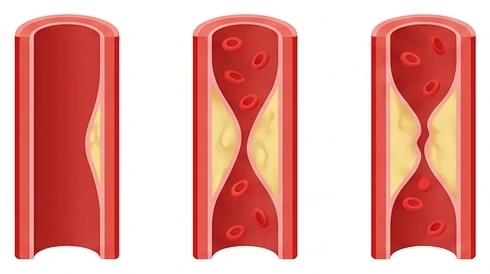
Peripheral artery disease progresses step by step. The stage you are at determines how urgent treatment is.
Your walking distance is a warning sign.
 1
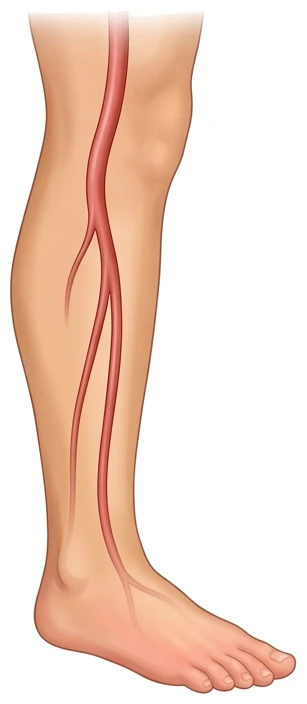
11. Healthy artery
The artery is wide and smooth; the leg and foot receive enough blood.
- No pain when walking
- The foot is warm and pink
- Pulses can be felt
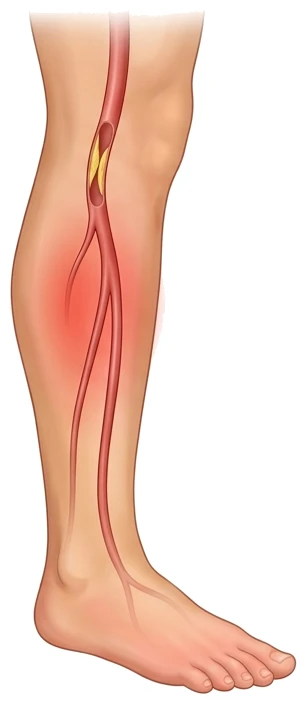
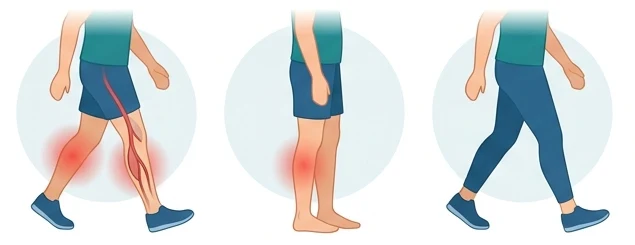
2. Calf pain when walking
Plaque narrows the artery; the increased need during walking cannot be met (claudication).
- Cramp in the calf, thigh or buttock after a certain distance
- Goes away within a few minutes of stopping and starts again at the same distance
- Walking distance shortens over time
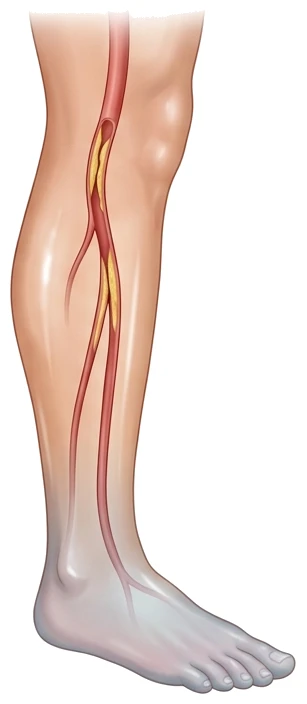
3. Rest pain
The narrowing is advanced; blood flow is insufficient even at rest.
- Pain that increases especially at night, when the leg is horizontal
- Relief when the leg is hung over the edge of the bed
- The foot is pale and cold, hair has fallen out and the skin is shiny
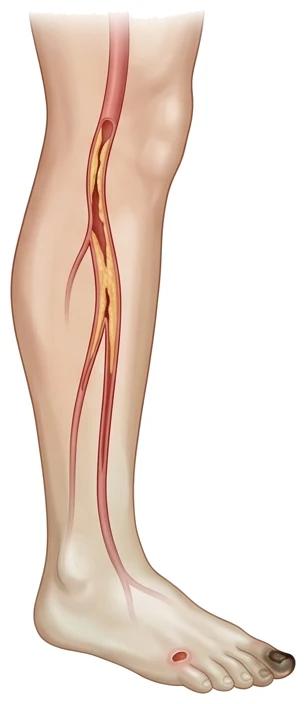
4. Wounds and tissue loss
Blood flow cannot sustain the viability of the tissue. This is the most advanced stage.
- A wound on the toes or heel that does not heal
- Bruising or black discolouration of a toe
- Urgent vascular assessment is needed
In addition, a constant feeling of cold in the feet, hair loss on the legs, thickening of the toenails and weakening pulses may be seen.
Who is at risk?
- Smokers; this is the strongest risk factor
- People with diabetes
- People with high blood pressure or high cholesterol
- People who have previously had a heart attack or bypass surgery
- People with kidney failure and dialysis patients
- People over 65
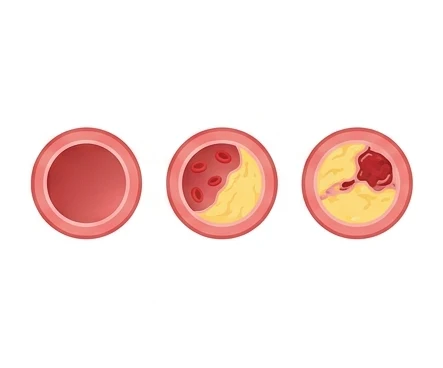
Diagnosis
The examination assesses the pulses in the foot and behind the knee. The ratio of the blood pressures in the arm and the ankle is measured. Imaging (Doppler ultrasound) shows the location and severity of the narrowing. If an intervention is planned, a CT angiography is used to map the vessels.
Treatment
Medication and risk control
This is the basic step for every patient. Stopping smoking, keeping blood sugar, blood pressure and cholesterol on target, and blood-thinning treatment. A regular walking programme noticeably increases walking distance in the early stage.
A regular exercise programme increases the maximum walking distance by an average of
0m
.
In patients with leg pain on walking (claudication), compared with those who did not exercise; 10 studies, 500 patients.
Lane R et al. Exercise for intermittent claudication.
Cochrane Database Syst Rev 2017;12:CD000990. doi:10.1002/14651858.CD000990.pub4
Percutaneous angiography, balloon and stent
A thin catheter inserted through the groin reaches the area of the narrowing. The vessel is widened with a balloon and, if necessary, a stent is placed. No incision is made; the procedure is usually performed under local anaesthesia and the patient gets up within a short time.
Mechanical thrombectomy
A clot that suddenly blocks the vessel is removed by suction through a catheter. In a leg with sudden onset of coldness, paleness and severe pain, time is critical; early intervention saves the limb.
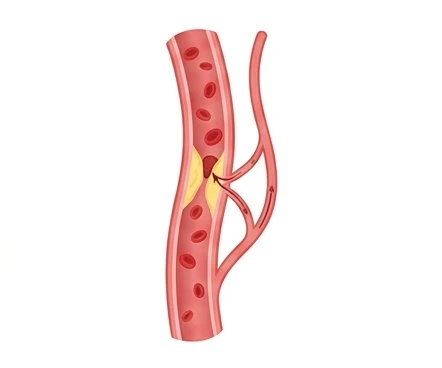
Bypass surgery
When the blocked segment is too long or too hard to cross with a catheter, a new route is created between the part before and the part after the blockage. The patient's own vein or a synthetic graft is used.
Frequently asked questions
My leg hurts when I walk. Could this be a slipped disc?
The two can be confused. Pain caused by the vessels always starts at the same distance and goes away when you stop. Back-related pain is related to posture, eases when you bend forward or sit down, and the distance varies. The distinction becomes clear with examination and imaging.
Does an artery stay permanently open after angiography?
An opened artery can narrow again if risk factors are not controlled. Stopping smoking and taking medication regularly are the most important factors determining how long the opening lasts. Regular imaging follow-up is recommended.
A wound on my foot has not healed for months and dressings are not enough.
For a wound to heal, enough blood must reach that area. Dressings and antibiotics alone do not work when circulation is insufficient. For this reason, vascular assessment should be the first step for foot wounds that do not heal.
Does stopping smoking really make a difference?
In this disease, smoking is by itself the most decisive factor. Stopping it increases walking distance, prolongs how long a procedure stays open and reduces the risk of limb loss. All other treatments work less well while smoking continues.
I have diabetes and a wound has opened on my foot. Is this diabetic foot?
A wound that opens on the foot of a person with diabetes is commonly called a sugar wound, and medically diabetic foot. For such wounds to heal, enough blood must reach the area. For this reason, wound care must start with an assessment of blood circulation.
My feet are constantly cold and numb. Could this be an arterial blockage?
Constant coldness and numbness in the feet can indicate reduced arterial blood flow. Nerve involvement caused by diabetes can cause similar complaints. Pulse examination and imaging are needed to tell the two apart.
Examination and appointments. Patients from Bitlis, Tatvan, Van, Muş and the surrounding area are examined at the Cardiac and Vascular Surgery Outpatient Clinic of Tatvan State Hospital. Appointments are made through MHRS (Türkiye's national hospital appointment system); details are on the Appointments and Contact page.
Related pages
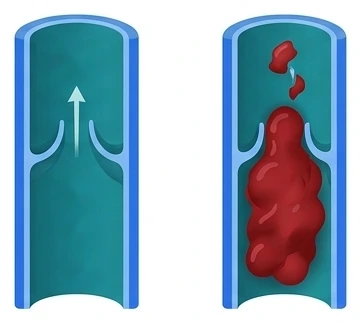 Deep vein thrombosisA blockage of the veins, not the arteries
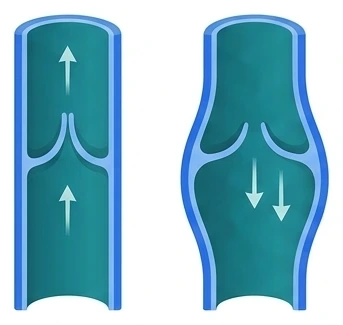 Varicose vein treatmentLeg swelling and enlarged veins
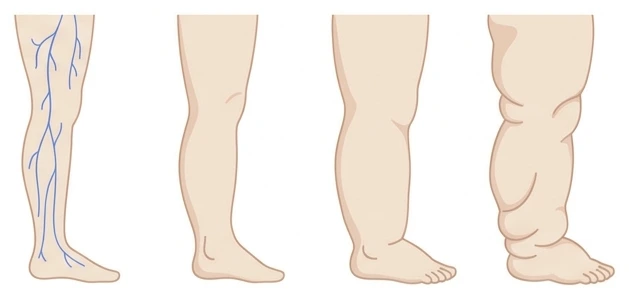 LymphedemaPersistent swelling that also involves the top of the foot