What is lipedema?
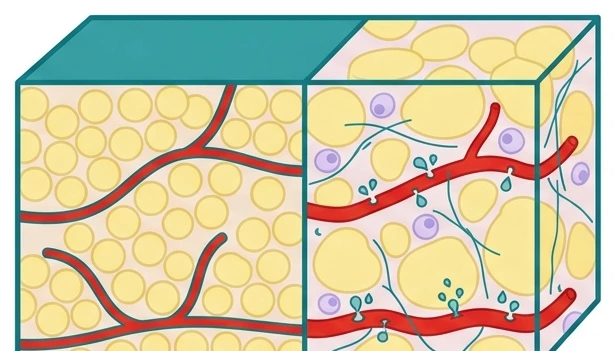
Lipedema is a chronic condition in which fat tissue builds up symmetrically and disproportionately in the legs (sometimes in the arms). It is almost exclusively seen in women and usually begins at hormonal transition periods such as puberty, pregnancy or menopause. A similar body build is common in the family.
Lipedema is not a weight problem.
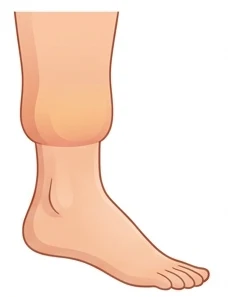
Its distinguishing feature is that the fat accumulation ends at a sharp border at the ankle, and the feet are not affected. A clear step, almost like a cuff, forms around the ankle. When weight is lost, the trunk and face become slimmer but the legs stay the same; this is the point that patients complain about most.
Symptoms
- Symmetrical thickening of both legs, with the feet not affected
- Pain and tenderness on touch or pressure
- Easy bruising even from minor injuries
- A feeling of fullness, heaviness and tightness in the legs
- An uneven, nodular tissue feel under the skin
- The legs do not change while the trunk slims down with diet and exercise
Stages
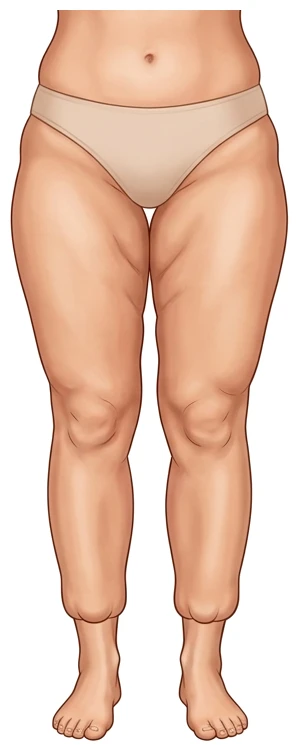
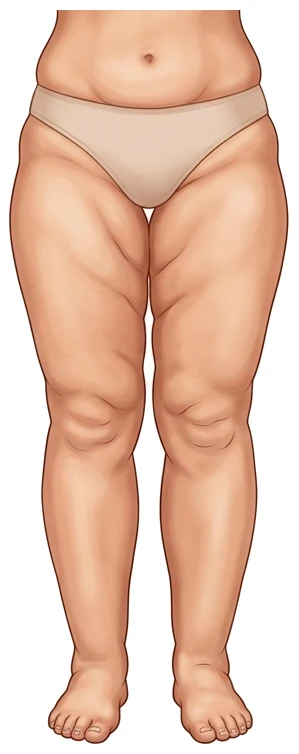
Lipedema is described in four stages according to the appearance of the skin surface. The stage affects both the severity of complaints and the treatment plan.
 1
1Stage 1
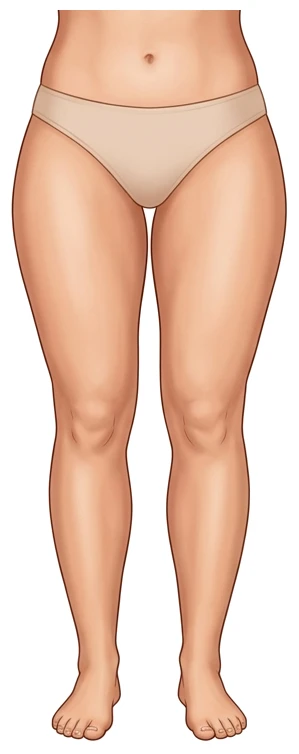
The skin surface is smooth; the increase is in volume only.
- Symmetrical thickening of the hips, thighs and calves
- The feet are normal
- Pain on touch, easy bruising
Stage 2
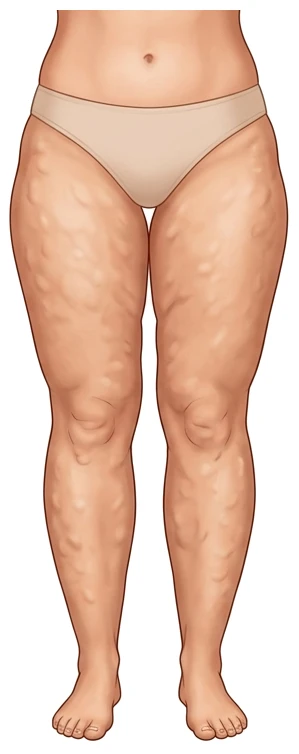
The skin surface becomes uneven, with dips and bumps.
- Nodules that can be felt by hand
- An orange-peel appearance becomes more pronounced
Stage 3
Hanging fat lobules cause marked deformity.
- Especially on the inner thighs and around the knees
- A cuff-like appearance above the ankle
Stage 4 (lipo-lymphedema)
Accumulation of lymph fluid is added to the picture.
- The top of the foot and toes also swell
- Complex decongestive therapy is needed
Types
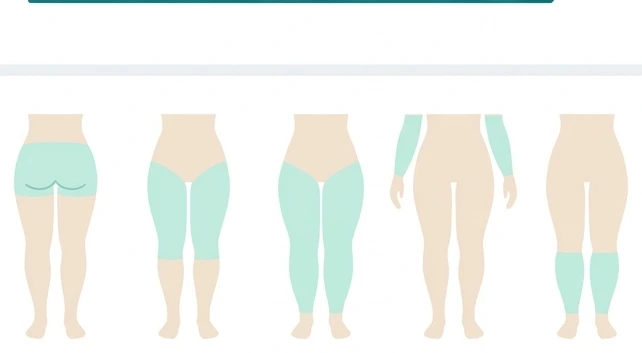
Separately from the stage, five types are described according to the area where the fat accumulates. More than one type can be present in the same patient.
What is it confused with?
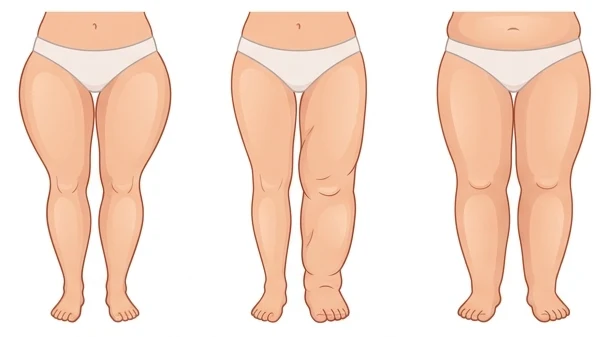
The main task in diagnosing lipedema is to separate it from three similar-looking conditions. This distinction completely changes the treatment.
Venous insufficiency and varicose veins
Venous swelling is usually one-sided or asymmetrical, increases during the day, decreases with rest at night, and may cause colour change at the ankle. In lipedema, the thickness stays constant throughout the day and the foot is spared. Both can coexist in the same patient, so the venous system must always be evaluated with imaging (Doppler ultrasound, CT/MR venography). For details, see the varicose vein treatment page.
Lymphedema
In lymphedema, the swelling involves the top of the foot and the skin at the base of the toes thickens. In lipedema, the foot is spared. If lipedema is left untreated for a long time, a lymphatic problem can be added over time; this is called lipo-lymphedema.
Obesity
In obesity, fat is distributed across the body including the trunk, pain and bruising are not typical, and the legs also slim with weight loss. None of these three features is seen in lipedema.
- Where it accumulatesSymmetrically in both legs, hips and thighsThroughout the whole body, including the trunk
- FeetStay slim, sharp border at the ankleFeet also thicken
- On touchPainful and tenderPain is not typical
- BruisingEasy and frequentNot typical
- With dietTrunk slims, legs largely stay the sameThe whole body, legs included, slims
- WhoAlmost exclusively womenWomen and men
How is it diagnosed?
Lipedema is diagnosed largely through examination: the shape of the fat distribution, the sharp border at the ankle, and a history of pain and bruising on pressure establish the diagnosis. It is not a diagnosis made by blood tests or CT.
The purpose of imaging is to rule out other conditions. Imaging looks for venous insufficiency and deep vein thrombosis. Depending on how the swelling develops, causes of oedema from the heart, kidneys and thyroid are also evaluated.
Treatment
There is currently no definitive drug for lipedema. Treatment has two aims: to reduce complaints and to slow the progression of the condition.
Compression therapy
Compression stockings of the correct pressure class, fitted to the patient's measurements, are the basic treatment. They noticeably reduce pain and the feeling of fullness at the end of the day. Stockings bought at random do not help; the compression grade should be determined by a physician.
Complex decongestive therapy
A programme combining manual lymphatic drainage, bandaging, skin care and exercise. It is particularly effective in patients with a lymphatic component.
Movement and nutrition
Swimming, cycling and water exercises support lymphatic flow without loading the joints. Weight control does not dissolve the lipedema tissue in the legs, but reducing the excess weight that accompanies it lightens the load and slows the progression of the condition. For details, see the Nutrition and metabolic inflammation page.
Surgery
In advanced cases where pain and restricted movement persist despite conservative treatment, removal of the lipedema tissue with specialised liposuction techniques may be considered. This is not classic cosmetic liposuction; it is planned to preserve the lymphatic structures. Compression treatment continues for life after surgery.
Frequently asked questions
If I lose weight, will my legs become slimmer?
Your trunk and face become slimmer, but the lipedema tissue in your legs largely stays the same. This is one of the defining features of the condition. Losing weight is still beneficial, because excess weight adds to the complaints.
Does lipedema progress?
If untreated, it can progress over the years: pain increases, movement becomes restricted, and the lymphatic system can be affected, leading to lipo-lymphedema. Compression and exercise started early slow this course.
Should I wear compression stockings in summer too?
Yes, because veins widen in heat and complaints increase. In summer, finer, breathable knit models can be chosen. What matters most is keeping the compression class.
I also have varicose veins. Which one is treated first?
Both are often seen together. If imaging shows a significant venous leak, it is usually treated first, because venous insufficiency increases swelling and pain and worsens the lipedema complaints. The order is decided according to examination findings.
How can lymphedema and lipedema be told apart?
The most practical distinction is the feet. In lymphedema, the swelling involves the top of the foot and the skin at the base of the toes thickens. In lipedema, the feet are spared and the thickening ends with a sharp border at the ankle. Lipedema is painful and causes easy bruising, which is not typical of lymphedema.
My legs are very thick compared with my body. What could be the cause?
A marked disproportion between the trunk and the legs, especially if it began in women during puberty or after pregnancy, suggests lipedema. The typical finding is a slimmer trunk after dieting while the legs stay the same. An examination is needed for a definitive distinction.
Examination and appointments. Patients from Bitlis, Tatvan, Van, Muş and the surrounding area are examined at the Cardiac and Vascular Surgery Outpatient Clinic of Tatvan State Hospital. Appointments are made through MHRS (Türkiye's national hospital appointment system); details are on the Appointments and Contact page.
Related pages
 Nutrition and metabolic inflammationSilent inflammation, diet and vascular health
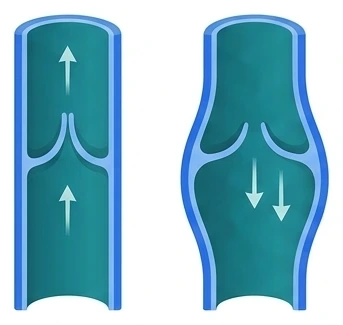 Varicose vein treatmentVenous insufficiency that often accompanies lipedema
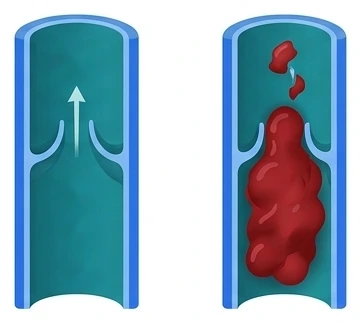 Deep vein thrombosisSudden, one-sided swelling
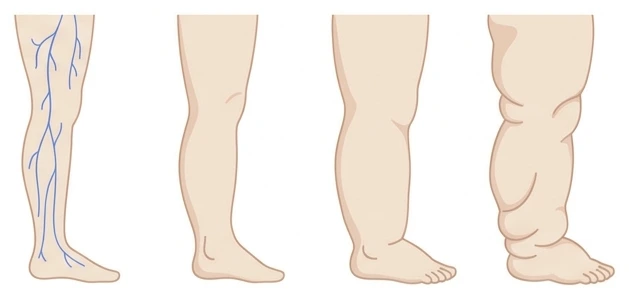 LymphedemaPersistent swelling that also involves the top of the foot