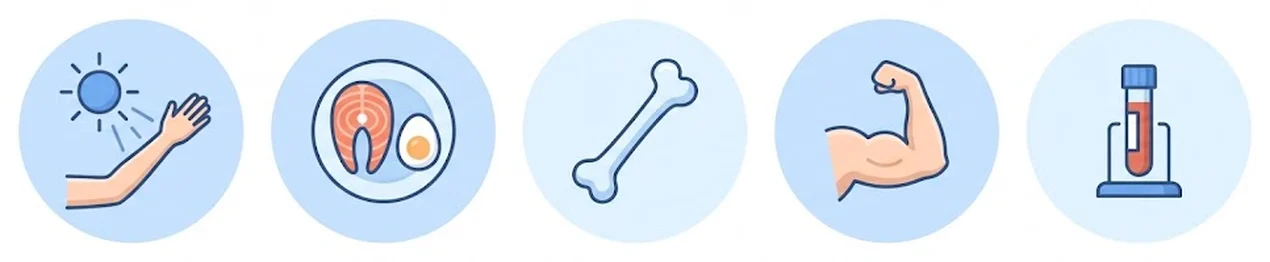
What does it do?
The best-known role of vitamin D is to help the gut absorb calcium and phosphate. Without enough vitamin D, bones cannot mineralise properly. Long-standing deficiency in adults leads to bone pain, muscle weakness and bone loss (osteoporosis), and in older people it is linked to falls and fractures.
Vitamin D receptors are found in many tissues, including muscle, the immune system and the vessel wall. This is why its effects beyond bone have long been studied.
Deficiency is silent.
Where does it come from?
The main source is the sun: UVB rays start vitamin D production in the skin. Oily fish such as salmon, sardines and mackerel, and egg yolk add a little. Production in the skin falls markedly in winter when the sun is low, with covering clothes, when working mostly indoors and with older age.


In summer midday sun, on the hands, arms and face,
0min
or less of sun is enough to make vitamin D.
Short exposures that do not cause sunburn are recommended; in winter and at northern latitudes this may not be enough, and production is lower in people with dark skin and in older people.
ICNIRP, in collaboration with the World Health Organization and the International Labour Organization. Protecting Workers from Ultraviolet Radiation. ICNIRP 14/2007.
who.int


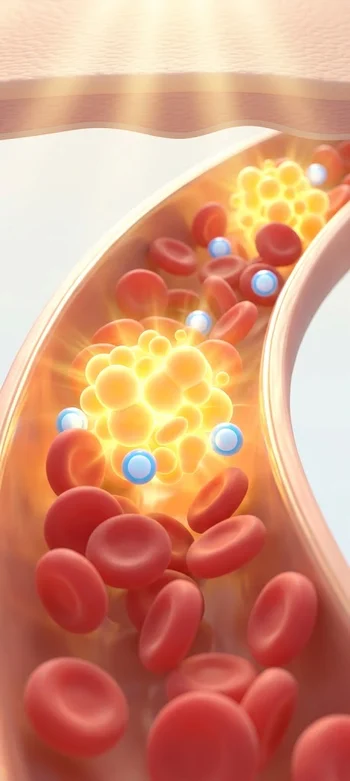

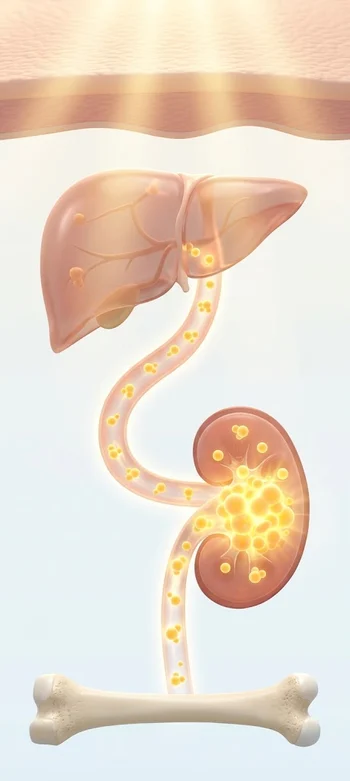
It all starts with the sun. Most of our vitamin D is made in the body thanks to sunlight.
Bare skin meets the sun. Production starts when the arms, face and legs see the sun.
UVB rays reach the skin. A cholesterol-like substance in the skin turns into vitamin D under the light.
It enters the blood. Vitamin D made in the skin is carried around the body in the blood.
It is activated in the liver and kidney. It is processed first in the liver, then in the kidney, becomes active and helps carry calcium to the bones.
Link with heart and vessel health
Observational studies have reported more cardiovascular disease in people with low vitamin D levels. This does not show that vitamin D causes the disease; low vitamin D is often a sign of little activity, indoor living and other illnesses.
In a randomised trial followed for about 5 years, among the
0
people taking vitamin D, heart attack, stroke and cardiovascular death did not fall compared with placebo.
Total number of participants; 2000 IU vitamin D3 daily compared with placebo.
Manson JE et al. Vitamin D supplements and prevention of cancer and cardiovascular disease.
N Engl J Med 2019;380(1):33-44. doi:10.1056/NEJMoa1809944
So correcting deficiency matters for bone and muscle health, but giving vitamin D to someone with normal levels to prevent heart disease has not been shown to help.
How is deficiency detected?
The 25-hydroxyvitamin D level is measured in the blood. Complaints such as tiredness and widespread bone and muscle pain can occur with deficiency but are not specific; many people have no symptoms at all.
When taking supplements
Daily vitamin D recommended by the World Health Organization and FAO for people over 65
0IU
that is 15 micrograms. 200 IU (5 µg) for ages 19-50 and 400 IU (10 µg) for ages 51-65.
200 IU (5 µg) during pregnancy and breastfeeding. These are general recommendations for healthy people; in deficiency the dose is set by a doctor.
FAO/WHO. Vitamin and mineral requirements in human nutrition, 2nd edition, 2004, Table 21.
fao.org
Current guideline: According to the Endocrine Society's 2024 guideline, healthy adults under 75 gain no extra benefit from vitamin D above the recommended daily amount (600 IU for ages 19-70), and routine vitamin D testing is not recommended for them. People aged 75 and over, pregnant women, adults with prediabetes, and children and adolescents may benefit from more than the recommended amount.
- Vitamin D is fat-soluble and builds up in the body. Taking high doses for a long time without control can raise blood calcium and lead to nausea, kidney stones and kidney damage.
- Your doctor should decide the dose and duration based on your measured level.
- People with kidney disease, a history of kidney stones or high calcium should only use supplements after consulting a doctor.
References
- Holick MF. Vitamin D deficiency. N Engl J Med 2007;357(3):266-281. doi:10.1056/NEJMra070553
- Manson JE et al. Vitamin D supplements and prevention of cancer and cardiovascular disease. N Engl J Med 2019;380(1):33-44. doi:10.1056/NEJMoa1809944
- Demay MB et al.. Vitamin D for the prevention of disease: an Endocrine Society clinical practice guideline. J Clin Endocrinol Metab 2024;109(8):1907-1947. doi:10.1210/clinem/dgae290
This page is for information only; diagnosis and treatment require an examination.
Related pages
 Nutrition and metabolic inflammationSilent inflammation and diet
 Sleep optimization
 Gut flora and butyrate