
How many hours should you sleep?
The recommended amount for adults is at least 7 hours a night. Regularly sleeping less than this impairs attention and memory; in the long term it is linked to weight gain, high blood pressure, diabetes and cardiovascular disease.
The recommended nightly sleep for adults to stay healthy is at least
0hours
Regularly sleeping less than this harms health.
Joint statement of the American Academy of Sleep Medicine and the Sleep Research Society.
Watson NF et al. Recommended amount of sleep for a healthy adult. Sleep 2015;38(6):843-844.
doi:10.5665/sleep.4716
Sleep is a treatment too.
What happens in one night?
Sleep is not a uniform state; through the night, light sleep, deep sleep and dream sleep (REM) repeat in cycles. Deep sleep occurs mostly in the first half of the night, while dream sleep becomes more intense towards morning.
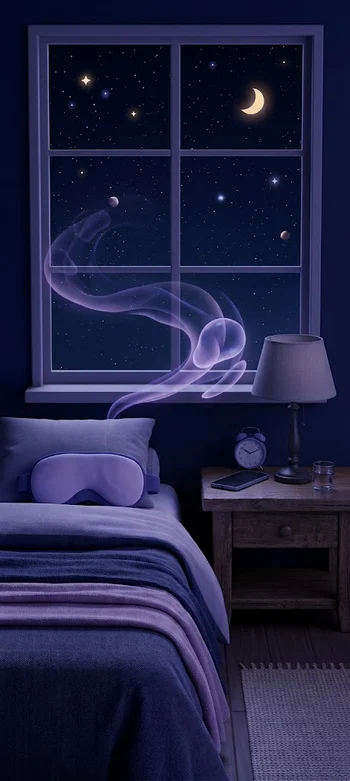
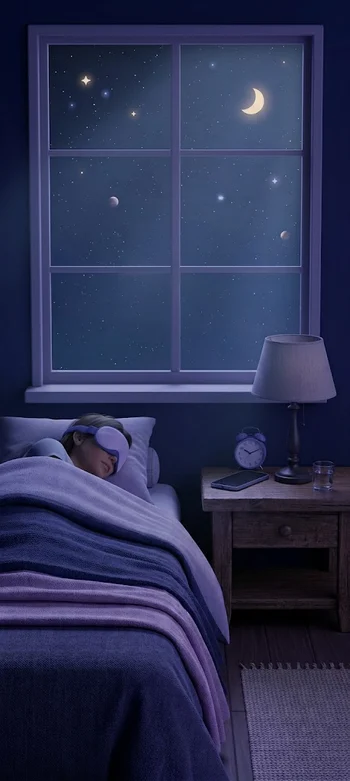

Evening routine. Lights are dimmed and the phone is put away. Dim light tells the body that night is coming.
Falling asleep. The body's core temperature starts to drop; the hands and feet help by giving off heat.
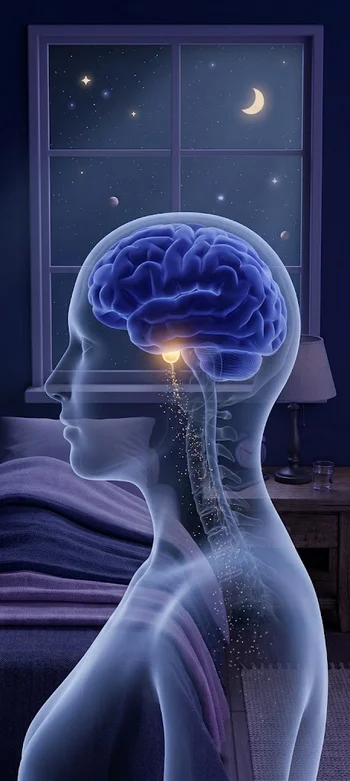
Deep sleep. The brain rests with slow waves. Most of the growth hormone is released in this stage; it is important for tissue repair and muscle renewal.
Morning. Daylight resets the internal clock. Getting up at the same time every morning and getting daylight makes it easier to fall asleep in the evening.
Deep sleep and growth hormone
Growth hormone keeps working in adulthood, repairing muscle, bone and tissue. In adults, most of the nightly release of this hormone happens during deep sleep. As we age, deep sleep decreases and, in parallel, growth hormone release falls too.
Your day begins with your sleep.
Caffeine: when to stop?
Caffeine blocks the effect of adenosine, which creates the urge to sleep, and it stays in the body for hours. Even a coffee drunk in the afternoon can shorten night sleep without you noticing.
Caffeine taken even
0hours
before bed clearly disrupts sleep.
A controlled home-based study in which 400 mg of caffeine (about 3-4 cups of filter coffee) was given 0, 3 and 6 hours before bed; sleep was disrupted compared with placebo at all three time points.
Drake C et al. Caffeine effects on sleep taken 0, 3, or 6 hours before going to bed. J Clin Sleep Med 2013;9(11):1195-1200.
doi:10.5664/jcsm.3170
A cool room, a falling body temperature
When falling asleep, the body's core temperature naturally drops, and sleep starts most easily during this drop. The drop is achieved by giving off heat through the hands and feet; a very warm room makes this heat loss harder and disrupts sleep. This is why a cool bedroom is recommended; the general advice is around 18 °C. A temperature at which you are comfortable under the duvet, neither cold nor sweating, is enough. A warm shower before bed can also help this process by increasing blood flow to the hands and feet.
Practical tips
- Go to bed and get up at the same time every day, weekends included.
- Get out into daylight after waking up in the morning; dim the lights in the evening.
- Put away your phone and screens at least one hour before bed.
- Stop caffeine in the afternoon; although alcohol makes falling asleep easier, it fragments sleep in the second half of the night.
- Keep the bedroom dark, quiet and cool.
- Finish a heavy dinner and intense exercise a few hours before bed.
- If you have snoring, pauses in breathing during sleep, or excessive daytime sleepiness, you need to be assessed for sleep apnoea.
References
- Watson NF et al. Recommended amount of sleep for a healthy adult: a joint consensus statement of the American Academy of Sleep Medicine and Sleep Research Society. Sleep 2015;38(6):843-844. doi:10.5665/sleep.4716
- Drake C et al. Caffeine effects on sleep taken 0, 3, or 6 hours before going to bed. J Clin Sleep Med 2013;9(11):1195-1200. doi:10.5664/jcsm.3170
- Van Cauter E et al. Age-related changes in slow wave sleep and REM sleep and relationship with growth hormone and cortisol levels in healthy men. JAMA 2000;284(7):861-868. doi:10.1001/jama.284.7.861
- Okamoto-Mizuno K, Mizuno K. Effects of thermal environment on sleep and circadian rhythm. J Physiol Anthropol 2012;31:14. doi:10.1186/1880-6805-31-14
This page is for information only; diagnosis and treatment require an examination.
Related pages
 Why is vitamin D important?Sun, bone and the right supplement
 Nutrition and metabolic inflammationSilent inflammation and diet
 Gut flora and butyrateSymbiosis, butyrate and the gut-brain axis
 Circadian rhythmLight, melatonin and insulin resistance