
How is metabolic health measured?
Five simple measures are used for metabolic health: waist circumference, fasting blood sugar (or HbA1c), blood pressure, triglycerides and HDL cholesterol. Having all five in the ideal range without medication is defined as "optimal metabolic health." All of these values can be learned from a routine examination and blood test.
Share of American adults with all five measures in the ideal range: only
0%
In other words, only one in every eight people is fully metabolically healthy.
Based on US national health and nutrition survey data (NHANES 2009-2016).
Araújo J et al. Prevalence of optimal metabolic health in American adults. Metab Syndr Relat Disord 2019;17(1):46-52.
doi:10.1089/met.2018.0105
Muscle: the engine of metabolism
Skeletal muscle is the tissue that uses a large share of the sugar in your blood after a meal. Muscle mass and strength decline with age; this loss increases insulin resistance and also raises the risk of falls and fractures. A simple indicator is handgrip strength: in the PURE study, which followed about 140 thousand people in 17 countries, every 5 kg drop in grip strength was associated with a 16% increase in death from all causes and a 17% increase in cardiovascular death.
Muscle is also an organ.
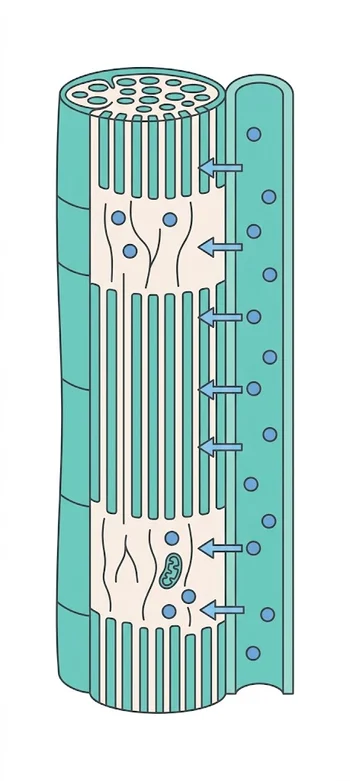

Muscle uses sugar. After a meal, a large share of the sugar in your blood passes through the capillaries into muscle cells.
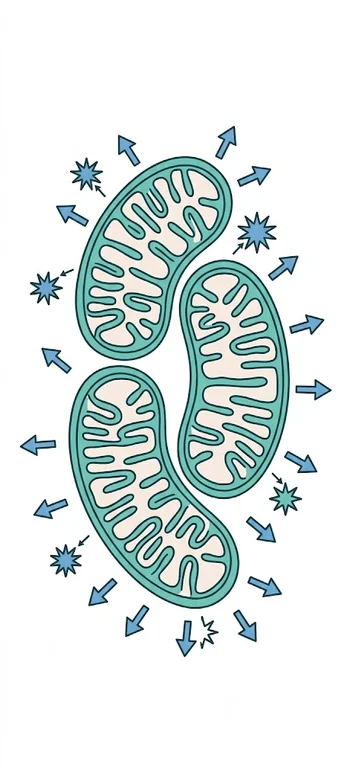
Mitochondria produce energy. The mitochondria in muscle cells burn this sugar and fat and turn it into energy.
Movement builds capacity. Regular walking and exercise increase the mitochondrial capacity and insulin sensitivity of muscle.
Fitness: one of the strongest indicators
Fitness, meaning the capacity of the heart and lungs to deliver oxygen to the body during effort, is one of the strongest indicators of longevity. In a study that followed about 122 thousand people who underwent exercise testing, the risk of death was about five times higher in those with the lowest fitness than in those with the highest. The risk of low fitness was comparable to, or greater than, that of smoking, diabetes and coronary artery disease.
Risk of death in those with the lowest fitness, compared with those with the highest
0times
This is an observational study; it shows an association and does not by itself prove causation.
In 122,007 patients who underwent treadmill exercise testing; adjusted hazard ratio 5.04.
Mandsager K et al. Association of cardiorespiratory fitness with long-term mortality. JAMA Netw Open 2018;1(6):e183605.
doi:10.1001/jamanetworkopen.2018.3605
When and how much should you eat?
It has long been known that calorie restriction extends lifespan in animals. There is no firm evidence for lifespan in humans, but in the two-year controlled CALERIE trial, a moderate calorie reduction (about 12%) clearly improved cardiovascular risk factors such as weight, LDL cholesterol, blood pressure and insulin resistance.
Time-restricted eating (for example, eating only within an 8-hour window during the day) is popular. However, in a one-year controlled study, no additional benefit of time restriction for weight loss or metabolic risk factors could be shown between two groups consuming the same calories. In other words, what matters is less when you eat than how much you eat in total and what you eat.
Mitochondria and insulin resistance
Mitochondria are the power plants of cells. Two of the known core features of aging are impaired mitochondrial function and the inability of cells to sense nutrient signals (such as insulin) correctly. In insulin resistance, cells do not respond adequately to insulin; blood sugar and insulin stay high. Regular exercise, especially muscle training, is one of the most effective ways to improve both insulin sensitivity and the mitochondrial capacity of muscle.
Practical tips
- Know your waist circumference, fasting blood sugar, blood pressure and blood fats; have them checked once a year.
- Do at least 150 minutes a week of moderate-intensity exercise such as brisk walking.
- Add muscle-strengthening exercise on at least two days a week.
- Break up long periods of sitting during the day with walking breaks.
- Cut back on processed food and sugary drinks; make portions smaller.
- Make time for sleep and stress management too; both directly affect metabolism.
References
- Araújo J, Cai J, Stevens J. Prevalence of optimal metabolic health in American adults: National Health and Nutrition Examination Survey 2009-2016. Metab Syndr Relat Disord 2019;17(1):46-52. doi:10.1089/met.2018.0105
- Leong DP et al. Prognostic value of grip strength: findings from the Prospective Urban Rural Epidemiology (PURE) study. Lancet 2015;386(9990):266-273. doi:10.1016/S0140-6736(14)62000-6
- Mandsager K et al. Association of cardiorespiratory fitness with long-term mortality among adults undergoing exercise treadmill testing. JAMA Netw Open 2018;1(6):e183605. doi:10.1001/jamanetworkopen.2018.3605
- Kraus WE et al. 2 years of calorie restriction and cardiometabolic risk (CALERIE). Lancet Diabetes Endocrinol 2019;7(9):673-683. doi:10.1016/S2213-8587(19)30151-2
- Liu D et al. Calorie restriction with or without time-restricted eating in weight loss. N Engl J Med 2022;386(16):1495-1504. doi:10.1056/NEJMoa2114833
- López-Otín C et al. Hallmarks of aging: an expanding universe. Cell 2023;186(2):243-278. doi:10.1016/j.cell.2022.11.001
This page is for information only; diagnosis and treatment require an examination.
Related pages
 Nutrition and metabolic inflammationSilent inflammation and diet
 Sleep optimizationHow many hours, caffeine and a cool room
 Movement and exerciseLeg exercises and walking
 Circadian rhythmLight, melatonin and insulin resistance